Friday, May 28, 2021

Dress Code Distractions

This is not the kind of topic I'd normally write about, since it's been covered to death in national media, but a recent news item brought up several ideas and memories for me related to education and teaching. A high school recently gained national attention when it was revealed that the yearbook advisor had photoshopped a number of girls' photos that she decided were too revealing. The negative attention was well deserved, to say the least. It seems right, as the critics have said, that the controversy sheds light on a long-running tendency of dress codes to be biased against girls and that the additional attention brought on the girls by the editing only reinforced ideas about body shaming.

These dress codes are often defended, as they were in this case, as helping to avoid "distractions," which places the responsibility squarely on the girls for the behavior and mindset of boys. We can do a better job of educating young men to be respectful.

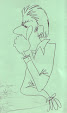
Here's me in high school, not violating dress codes but clearly needing some wardrobe assistance. 


The editing itself, besides sending the wrong message about shame, was also poorly done and represented a violation in and of itself -- changing someone's image without their permission. It reminded me of one of the first ideas I learned in a college photography class when discussing the ethics of photography: while there are legal guidelines about what photos you are allowed to take and who is allowed to edit them, there are also ethical concerns and even possible legal violations with photographing and/or misrepresenting people. In my long-ago photography class, the instructor told us how Native Americans sometimes viewed their photographs as a kind of "stealing of the spirit" and were very reluctant to be photographed in the early days of photography. As I recall, being cocky young people, we sort of laughed at the corny way in which this professor presented this idea, but I also remembered the general fact (which apparently is true, and some Native Americans still resist being photographed) long after learning it. She was a good instructor, and I'm embarassed to remember my attitude in that class.

The idea of girls' outfits being "distracting" also reminded me of how long this discussion has been going on, and it brought to mind a certain uncomfortable moment in my high-school precalculus class. I don't remember the teacher's name, but he was middle-aged man who had worked as an engineer and was now teaching math to high schoolers. (But he was no Jaime Escalante.) For some reason, before class started, the girls were talking about the dress code and the prohibition on skirts above the knee. The teacher, who was standing at the front of the room, with an obvious vantage point that made his comment quite unnerving, offered that too-short skirts were in fact "distracting" for him as well as for the male students. He said this matter-of-factly, as if to say "don't you realize I'm a male with normal sexual drives standing up here?"

The entire class, including the boys, tittered uncomfortably but also objected vaguely, as if we wondered what right this older male had to make such a comment. This was the 1980s, of course, so we didn't expect any repurcussions; it's hard to imagine a teacher these days making such a comment, even he thought it was true, without some serious blowback. And if he thought it was true, perhaps he should have been focusing more on improving his habits of mind; while you can't control your thoughts and emotions all the time, you can practice a more Buddhist-like attitude of steering your thoughts in certain positive directions, which in turn improves your actions and your life.

I wonder about this teacher's thoughts, actions, and attitudes. He didn't like me very much, because I had a habit of falling asleep in class. The class was right after lunch, and his droning lectures were no match for the effect that lunch of a chicken-supreme sandwich, a peanut-butter bar, and a Coca-Cola had on my system. He would try to embarass me by saying nasty things about my future to wake me up. This of course only tended to make him look petty and make the other students sympathize with me. 

I still did reasonably well in the class, as I recall, at least well enough to place out of the course for my first year of college. It was the 1980s, as I said, so I'm not surprised he did nothing to help me. Teachers were still then, for the most part, largely figures of authority, though of course there were caring and empathetic teachers as well. So the questions are rhetorical, but I wonder why he didn't ask what was wrong with me, question whether I was depressed or getting enough sleep. I wonder (but again, not really) why he didn't take more of an interest in helping me or maybe even just pointing to some resources to help me make better dietary choices and help me to avoid crashing in his class. (Of course, there was never any consideration of the possibility that he was too boring.)

The two memories of a high school versus a college teacher also point to some still-remaining important differences in their roles. College teachers can be caring and should point students to resources when they can, but they don't see the students every day, and they don't know them as well. And the students are older and at least ostensibly adults, so they shoulder more of the responsibility for their own lives and their own academic success (even in a boring class). Dress codes have always struck me as being dangerous in their trivial nature; they presume to fix more than they do and really just continue the K-12 tradition of teaching students to be compliant. Why are we worried about what students are wearing if they aren't learning, and do we really think the distractions of certain clothing choices (or god forbid, long hair) are more important than poor diet or lack of sleep when it comes to learning? Quite obviously, we have done nothing to alter school schedules after compiling decades of evidence that adolescents are not getting enough sleep and should not be going to school at 7 a.m., and in fact we keep piling on the commitments. The only real explanation -- a very poor one -- that I've heard for this lack of change is the fact that it would make the circulation of school buses impossible. 


(Afternote: When I've taught at dual-credit locations in recent years, I've noticed how much more relaxed the dress codes in Texas are these days compared to what they were in my youth. Boys sport beards, and everybody wears shorts. Thank god for that kind of positive progress. Shorts are pretty darn necessary in Houston during certain months. On the other hand, the soda machines and poor food choices remain, as far as I can tell, and now students can bring coffee to school!) 


Thursday, May 27, 2021

Sexism, "Two and a Half Men," and Hemingway

I recently came across this 2015 click-bait article offering a list of the "10 most sexist shows on TV." Number 5 on the list, and featured prominently through illustration in the article, is the show Two and a Half Men. Though it's hardly surprising to see this show on the list, I'd suggest that it has more to do with the authors' conflating of the show with the persona and lifestyle of its one-time hedonistic star Charlie Sheen.


(For the record, I've never seen the show without Charlie Sheen, but think it's a pretty funny show most the time. More on that -- what makes it funny -- in another post.) 

The article calls the show "sexist" (misogynistic is used elsewhere in the article) based primarily on the presence of Charlie's stalker-crazy neighbor Rose, the cold and "selfish" mother character, and the parade of short-lived female dates and one-night stands, who are supposedly portrayed as "usually unintelligent and superficial." A similar charge of misogyny is often levied at Hemingway, and I think in both cases it has more to do with our perceptions of Hemingway the private man (who often treated women terribly) and Charlie Sheen (whose life has been raising eyebrows at least since his entanglement with the Heidi Fleiss trial in the 1990s; this fascination with Charlie and the fictionalization of his lifestyle is basically the engine that drives Two and a Half Men and the more cynical but still successful sitcom Anger Management). 

The article misses the point that on "Two and a Half Men," as with just about any sitcom (which lean toward "low" comedy, and that's not an insult), the joke is usually on the main characters. Male characters on sitcoms in particular tend to come off even worse than the women, but in low comedy generally, we are laughing at the main characters as much as we are laughing with them. Contrary to the assertions of the article, many of the "fleeting" female characters on Two and a Half Men (dates with various backgrounds, but also the expected array of waitresses, strippers, stewardesses, etc.) are intelligent, strong-willed, and unwilling to cater to the immaturity of Charlie or to tolerate the annoying qualities of Alan. Charlie and Alan, as they often admit, are the ones with issues, and most of their issues can be traced to a fear of commitment or a tendency to see women in the simplest of terms. They sabotage relationships and spoil good things because they fear the motives and minds of female characters, who they inevitably see in adversarial terms. In other words, yes, the characters can be misogynistic, but that doesn't mean the show itself has that overarching message. 

With Hemingway -- though of course it's more complicated and the comparison is mostly a postmodern dart on the wall -- with the exception of some fantasy-tinged, oversexualized characters, the female characters are often stronger and more human than the sometimes self-hating and self-destructive male characters. Read "Hills Like White Elephants" and decide which of the two only real characters in the story -- the male or female -- come off as more human, more compassionate, more likeable. Hemingway is often showing men at their worst -- pathetic and manipulative, self-defensive in their vulnerability -- and though the male characters don't always get it, it wasn't an accident on Hemingway's part. 

The image from Two and a Half Men featured prominently in the article, of a supposed menage a trois involving Charlie, is actually a shot from a fantasy sequence. Yes, Charlie has an immature and hypersexualized mind, but the females in this case are illusions. The evidence that the mother is unlikeable and hateful is hard to refute, but she's mostly there as a foil, to provide a supposed motivation for the brothers' issues but also so she can repeatedly remind the "boys" that they're grown men who cannot blame their mother forever. This is a positive message for men overall: at some point, it's time to grow up and stop blaming others. But comedy isn't about sending messages as much as it is about laughing at the failures of others -- and also ourselves -- to see what's already in front of them. 


Saturday, December 12, 2020

Pandemic Projects

It's December 2020, and I've just completed a full semester of teaching completely online. The pandemic continues and has gotten worse by some measures. The end is only barely in sight with the new vaccines slowly being distributed.

Besides bingeing old TV series and catching up on sleep, one of the stereotype activities that people have been resorting to during this home time has been baking, specifically baking bread. I haven't baked any bread, but I thought I would reflect on some of the other home projects and activities I've dabbled in during my mostly self-imposed home quarantine. (In Texas, the legal lockdowns have been few, and though many things like bars remain closed, almost everything else is open if you're so inclined to leave the house. I just don't think it's wise. I've been working at home, anyway, and I'm pretty good at being a homebody, so I figure there's no good reason to endanger myself or others.) 

As I mentioned, I've been working most of this time, so I haven't had tons of dead time -- just mostly those hours that would have been spent driving, going out to eat, and running other errands that have been put on hold. The day is also irregular, in that I have been working and staying available 8-5 during the regular semester, but I've also been doing other things as well as working at night and early in the morning, hours before the normal office day. So my day is pretty flexible. 

Here's a list of projects that I've done that would not normally be part of my relaxation or housekeeping routine. (I'll add that while I enjoy cooking dinner sometimes, I never bake normally, and I'm also not much of a handyman.)

1. Made apple liqueur/liquor, sort of like Apple Pucker, using fresh Granny Smith apples, Everclear, and some other ingredients. This was all left to ferment and then put in a jar to make upscale appletinis. (This came out of House Party cocktail hours with my friend Bill and was his recipe; I'll write another blog about House Party, perhaps. It feels like drinking while you're in the middle of the Brady Bunch opening credits.)

2. Added dozens of new trivia notes to Internet Movie Database. This is something I've been doing for years, but I don't do it very often, just when something occurs to me. One example of a trivia list I researched and made that was posted was about actors who appeared as different characters on Dallas and its spinoff Knots Landing. (That's a good example of "trivia," for sure.)

3. Made peanut-butter cookies from scratch. I guess this is as close as I got to baking bread. Justine's friends at work loved them. (She returned to work early in the summer.) 

4. Began scanning my dad's slides. I discovered a lot of images I don't remember at all. It's sort of unnerving sometimes, peeking into these very obscure memories. 

5. Completed a doctorate. (OK, this was going to happen anyway.)

6. Baked a chocolate layer cake with two kinds of frosting. This was not from scratch, which is why it's not closer to baking bread than #3.

7. Began sorting through my dad's coins. This has been more interesting than I anticipated, and I've learned quite a bit. I also spent some time early in the lockdown, before the weather turned hot, sorting through my dad's research boxes in the garage, throwing most of it away. This was both cathartic and existentially difficult. 

8. Related to #7, all but finished putting state quarters in a "collector's" book I got from the credit union many years ago. I want to mail these to our nephew when I'm done, but we're still missing Michigan. It was still not a bad bit of progress, in that the book had been sitting in the back room with maybe 7 quarters in for 10 years. (These aren't particularly collectible except as a hobby-type thing, which is why they make series like this anyway.)

9. Made fresh egg salad and fresh chicken salad for the first time. Probably won't make the egg salad again. It's too much trouble for something you would normally just get at the deli once in a while. 

My chicken salad


10. Made chicken spaghetti (in casserole form) using leftover roast chicken. This was definitely a winner. 

11. Started freezing more of our leftover dinners out of a sense of not wanting to waste food, but just lately started throwing most of those out since I didn't like what freezing did to the texture of the food. (I think when people freeze food for later, like when somebody makes and freezes a bunch of meals for grandma, it's usually not yet cooked or only partially cooked?) The chicken enchiladas are the only thing I think I'll keep freezing. 

12. Paid off the house. 

13. Made and folded an omelet perfectly for the first time. 

14. Finally learned how to poach eggs the right way. I still like the eggs at Classic Cafe better.

15. Made a strange recipe called peanut-butter chicken for dinner. I like almost anything with peanut butter, but not so much this. (What, is he going to post every new recipe he made? I dunno ... nobody reads this blog anyway.)

16. Donated my pandemic stimulus check to a non-profit. (This is both a sneak-brag and a political jab.)

17. Installed a bidet in the spare bathroom. A lot of people were doing this because of the toilet-paper shortage. In fact, it took several weeks to receive the bidet from Amazon, and then it sat on the floor for another two months before I got around to installing it. This was my crowning achievement, not because it was particularly difficult, though I'm nervous doing anything that involves unscrewing the parts of a perfectly good toilet. It was just an interesting and unusual thing to have. I can't say it's really helped save us toilet paper, and I'm not quite sure how people do without toilet paper just because they have a bidet, particularly an after-market toilet attachment like this one (see video below). It's nice to have, though. I was surprised by that. 


18. Things I didn't do that I thought I would do during lockdown: write a lot, practice the guitar a lot, clean out all the closets (where can you take stuff right now?), and read all the unread books. I did read a lot and finished some books that had been lying around.

All of this while still remaining gainfully employed and supervising others. Not too bad for a pandemic.   

Saturday, August 22, 2020

Little House in the Pandemic

During the pandemic lock-down crisis of 2020 in the United States, the 1970s TV show "Little House on the Prairie" has become one of the shows that people are streaming online as they seek ways to feel better and spend idle time. A New York Times TV critic called "Little House" a kind of "comfort viewing" and cited several reasons for renewed interest in the show, including a couple of episodes that deal directly with contagious disease and social distancing.


My wife and I have been "bingeing" the show as well, before we were aware it was a mini-trend during the pandemic, and I believe that while the show does represent the simplicity and admirable values that the Times critic reflects on, it is also simply a great artifact of a time when TV itself was simpler. The 1970s weren't a simpler time, after all, and though the frontier age might seem simpler in terms of family values and small-town pluckiness, it was a dangerous and difficult time to be alive. Though death is rare on "Little House," they don't ignore these realities -- though there is of course some glossing over in the form of well-pressed costumes, blow-dried 70s hair, and flattering lighting, to say nothing of the show's humor and neatly packaged plots.

My sister and her significant other have also been bingeing the show from their home in Nevada, and so it has become a cross-country family affair for us. We watch episodes and text jokes and observations, as well as trivia (mostly this is my doing) on guest actors and other connections. ("The actor playing the big kid in school is the son of the guy who played Hoss on Bonanza," I text her. "Really?" she says, because what else would you say to that?)

My sister is a bit younger than I am, and this show began when I was a very young child and she was not yet born, but it reminds me of a time when TV was something that was "on" in the living room. Either you watched it or you didn't, and often, a family would gather to watch certain shows. I remember watching "Little House" with my family, gathering around on the shag carpet and bean-bag chairs, and I remember my older sister continuing to watch the show on Monday nights in its later years during the 1980s. The show was around almost my entire childhood.

They speak of the recent cable-TV-series boom as representing TV's "golden age," with shows like "The Sopranos" and "Mad Men," but TV as a true medium really peaked in the 1970s with shows like "Little House." The show is incredibly well made, well-lighted and filmed (instead of shot on video tape, a difference in quality that can be easily seen when watching old sitcoms or soap operas). Melissa Gilbert was an astonishingly talented child actress, such that she often makes the other capable child actors on this show seem out of their depth, and Michael Landon was a luminary presence. His quick death in the early 1990s was such a shock in part because he'd always been on TV, starring on an unbroken chain of three successful TV series and countless commercial spots for Kodak.

In spite of the relatively high production values, it's interesting to see how TV production in general was simpler with a show like "Little House," when they really weren't expecting people to watch the show in reruns (sitcoms were more typical rerun fare), and nobody was watching via streaming or videorecordings. Sets and houses are reused in different episodes (there is one house that serves as the dwelling for four or five guest stars before it becomes a school for the blind). Guest actors later become regulars in different roles. Michael Landon, besides being a TV icon and something of a sex symbol, was also an efficient and talented TV director who kept this show running like a machine. The show never seems "cheap," but it was TV made to be TV. Michael Landon himself used to apparently say, "We're not changing the world here."

In spite of this demurring characterization, TV did become more daring and strived to be more relevant in the 1970s, after a couple of decades of shows like "Ozzie and Harriett" and "The Brady Bunch." "Little House" focuses on so-called "family values," but it also deals with touchy issues like child abuse, drug abuse, and alcoholism, and while many TV series had similar storylines, the producers of "Little House" seemed to understand that it's the details that make the difference. No story is really new, as they say.

It's fun to see the parade of character actors in guest spots, as well. As was the common practice in those days, characters appear for episodic storylines and then are never heard from again. It must have been a good time to be a character actor. Some of these very familiar-looking but nameless actors were in 200 or more shows during their careers. Westerns and nighttime dramas helped these working actors stay afloat, in ways that it's hard to imagine the scattered and narrow-casted speciality series doing these days, what with their short seasons (10-12 episodes), long story arcs, and small cast of characters. 

TV may have gotten better over the decades, but in some ways, it's not TV at all anymore. 


Tuesday, September 24, 2019

Keep the records spinning

Joe Biden's confusing and stumbling reference to keeping the "record player on" has been hashed out and ridiculed on Twitter quite thoroughly. I won't revisit the educational concept he was trying to touch on there (that preschoolers need to "hear more words" or even possibly classical music), or even detail the history of how record players have been used in educational settings over the years. (The movie Conrack used the record player in particularly memorable and cinematic ways, though the movie has been criticized for playing on the "white savior" myth.)

This is an image of a shirt for sale at The Bitter Southerner, a magazine I highly recommend. And their merchandise sales benefit the Appalachian Citizens' Law Center.


For me, a more interesting aspect of Joe Biden's gaffe is that he was obviously trying to cover up his mention of TV as a possibly beneficial influence on children. His brain accessed and uttered a quickly conjured replacement (inself an fascinating linguistic phenomenon) that seemed vaguely more educational and verbal than TV.

Over the years, there have been mixed reports of the value of children's programming on TV. This recent report on a study seems to show significant benefits.) Children are "hearing words" on TV, of course, but they're also being exposed to distracting imagery, as well as possibly violence, sex, and loads of advertising (if they flip the channel from PBS).

I think if I had kids and let them watch much TV, I would do so with the captioning on. Then the kids are "reading" TV as well, and also being exposed to the craft of dialogue in a certain way. (This would help a future screenwriter.)

As a kid growing up in the 70s and 80s, I watched a lot of TV. As the Albert Brooks character says in Defending Your Life, "it was everything to me." Although I can think of a lot of negative things I learned from TV, I also remember getting interesting career ideas, like wanting to be a photographer when watching the Odd Couple or becoming interested in news reporting while watching Lou Grant. (In fact, I ended up learning and using both those skills in my early career working in the newspaper business.) This was before the "golden age" of TV, as represented by the high-minded cable shows, but whatever TV lacked in thoughtfulness, it also had a certain innocence and light-heartedness that seems largely missing today. Even the comedies have a cynical or satirical edge.

At its best, TV exposes us to ideas and worlds we do not know. We shouldn't be so quick to dismiss it (or record players, which have been making a real comeback in recent years. What's old is new again.)

Tuesday, September 3, 2019

Students as Customers

Professors bristle at the ever-growing call to treat students in higher education as "customers" or "clients," and for good reason. As I've written about elsewhere, the need to compare students to anything is strange. Why do we need an analogy? And if this is the appropriate analogy, what are the implications for education?

Obviously, professors don't like this comparison (or change in labels) because it implies that students are paying for grades or paying to be treated well. It suggests that we are here to "serve" students in obsequious fashion and to treat education like a "product," reducing the classroom experience to a transaction.

More than anything, perhaps, professors think of the old adage that "the customer is always right," and wonder if this slippage of terminology will lead to a further erosion of authority and standards. If a student demands a grade change, does that mean the customer gets what they want?

As anybody who has ever worked in retail or the service industry will tell you, though, the customer isn't always right. Often the customer is wrong. While efforts may be made to make a customer happy, sometimes the customer is incorrect about the facts or misguided in what they think they deserve, and a worker may endanger the business or waste valuable time or resources by bending to the customer's wishes.

A drunk customer who wants more to drink but has been cut off is not "right" in demanding more, and the bartender would be unwise to serve him. A customer who demands an employee break company rules or ethical standards is not right. A customer who demands something for free, when it isn't really warranted, is really just engaging in a kind of theft by acquiescence. That's not fair, ethical, or "right."

Beneath consideration would be the customer who becomes rude, loud, or even verbally abuses a waitress or salesperson just because they believe they're allowed to do this as the customer. This is a customer who is not worth a business's time, no matter how much an employee might be tempted to try to do whatever he or she can to calm him down.

Students should be treated like customers in certain contexts, e.g., when registering and paying for classes, when eating at the cafeteria, or when buying books at the campus bookstore. Professors and everyone else at the college have a duty to be polite and professional with students, and to treat them with compassion and human understanding, but that's not the same as treating them like customers. There's no need for a new model or analogy, although we can all think about how to improve our day-to-day behavior and interactions with students.


Monday, August 26, 2019

Honorary Doctors

Honorary doctorates have long been an interest of mine, for reasons that are hard to articulate. It's curious how guarded and jealous humans are when it comes to titles, and it's rather fascinating how elevated the title of "Doctor" in particular has become in America. Territorial arguments abound about who is entitled to call himself "Doctor," even with earned doctorates (those outside of academia may wonder why anyone except physicians use the title, whereas those within academic point to the history and note that an M.D. is a professional doctorate). Honorary doctorates, of course, raise all sorts of suspicions. They are used for fund-raising or entice guest speakers; they are given to those who are less than deserving. They trivialize education and demean earned degrees. Some universities do not ever give them, as a matter of policy and practice. But still they proliferate, and we are weirdly fascinated when rock musicians or movie actors receive honorary doctorates. They probably shouldn't actually use the title, though. As this writer points out, celebrity figures, even if they are superstars in their field, who invoke or prefer the title "Dr." after receiving an honorary doctorate may be regarded as vain, supercilious, or worse.

The honorary doctorate, as the writer of the linked article also notes, has been diluted through its overuse as a reward for those giving commencement addresses. Even Kermit the Frog received an honorary Doctorate of Amphibious Letters, which is cute but awfully silly.  Yet I would argue that the perfectly legitimate purpose of the honorary doctorate, whether the person uses the title or not, would be to honor those like Maya Angelou (the main subject of the article above), who, even though she did not have much in the way of formal education, achieved great things in a field with academic connections (literature). 

Other deserving figures in the past have been similarly honored with doctorates. These include Mark Twain, who apparently liked wearing his Oxford cap and gown in all sorts of circumstances, and Samuel Johnson, who had a master's degree but was given an honorary doctorate by Trinity College for his dictionary, among other things. Others took to calling him Dr. Johnson (an honorific still applied as shorthand), and it fit because this man was a true leader in his field of scholarship. More recently, the classical guitarist Christopher Parkening -- a pioneer in his field who founded a guitar program at a university when he was only 22 -- never earned a college degree, though he was awarded a much-deserved honorary Doctor of Music in 1983. 

Mark Twain


Discussions abound about who should be called "Doctor." Some say the title should be reserved for medical doctors, but Ph.D.s push back by noting that the original word had specific connections to teaching and scholarship. Confusingly, not all countries use doctorate degrees for physicians, and historically, physicians and surgeons used the title "Mister."

The value of a true honorary degree (given to honor accomplishments) can best be understood by the examples that seem meaningful and even moving. When I mentioned to my wife the other day that Benjamin Franklin had little formal education but did have an honorary doctorate that he cherished (he referred to himself as "Doctor"), she about fell off her barstool. (Yes, this was in fact a "cocktail napkin" conversation.) The fact that this undisputed genius, a man generally regarded as one of the greatest humans who ever existed, a man responsible for countless inventions and scientific discoveries, did not have a college degree is astonishing. But I think she was more astonished to think how Benjamin Franklin, even with his many accomplishments, still had a need to be considered "educated" in a way that was certified by credentials and paper. We can call this vanity, but it speaks more to the continuing value that degrees have in the minds of people. That's not such a bad thing. As younger men, Franklin and Twain -- both from modest backgrounds -- were too busy (and too cash-poor) to indulge much time in education, but they still valued education and wanted to be associated with the academy. They certainly have that status now, so why shouldn't they have enjoyed it while still alive?